



November 30, 2021
Final Study Tips for June in CFA Exam Preparation
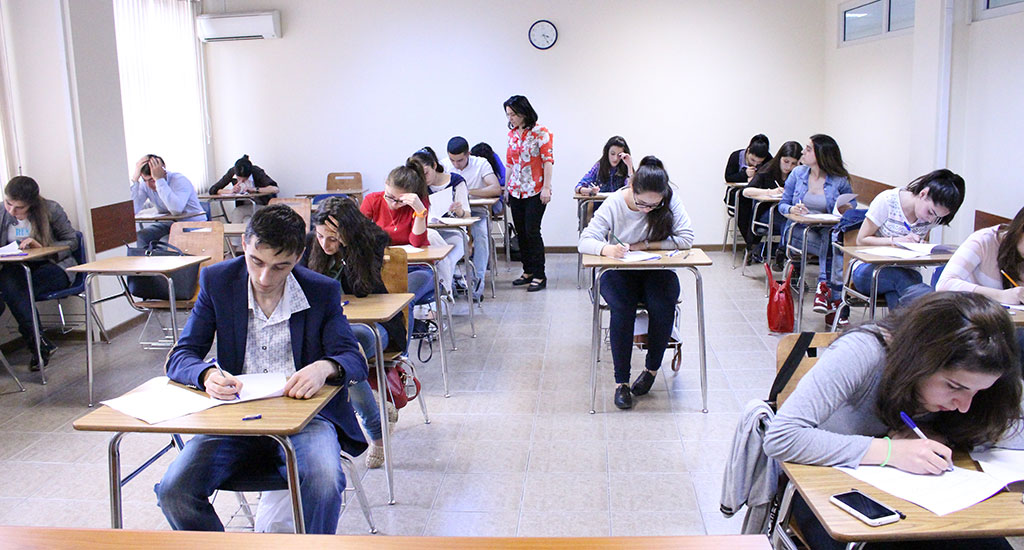
While financial professionals can achieve a variety of certifications to advance their careers, the Chartered Financial Analyst (CFA) is undoubtedly the most well-known and sought after by employers for buy-side traders and sell-side analysts. With a reputation for being one of the most demanding certification processes, the CFA is widely regarded as the gold standard in the industry. According to the CFA Institute, each exam level has a success rate of 40 percent to 65 percent, meaning that less than 30% of level one candidates pass the third exam. As a result, passing the charter exam is a big testament to your hard work and knowledge, and it can help you stand out among competitors who haven't.
However, before you can reap the benefits of being a CFA, you must first pass the exams, which can be difficult to do without a well-planned study strategy. Exam time is rapidly approaching for students at all levels, and students who will be taking the exam should have spent at least six months preparing. It's crunch time now, with less than a month until the first Saturday in June!
Here are some ideas to help you make the most of your final month of preparation, whether you're studying for your first CFA exam or the third and final level:
•Read, answer questions, and review: The CFA exam demands a lot of reading, so focus on those sections when studying. Choose a method that works best for you—some individuals prefer to do practice problems as they go, while others prefer to finish entire sections before writing anything down. Whatever approach you use, make sure you schedule regular review days and practice exams as checkpoints throughout your last month of study to verify you understand everything. A great way to do this is to go over the Learning Outcome Statements (LOS), or objectives, that come with each part.
•Make flash cards and carry them with you: Taking notes as you go is vital, but scribbling key points on flash cards and studying them on your commute to work or during your lunch break will help you remember important information during the final month of preparation. Because many financial services employees already have a full schedule, having access to notes without having to lug around reams of paperwork could be advantageous.
•Practice with your calculator: Use the calculator you'll be using on the test for solving problems. It's vital to be familiar with all of the device's functionalities in order to be quick and efficient with each set of questions. Despite the fact that the exam is 6 hours long, you should devote every minute of your time to answering each question. Knowing what tools you have available to you will only help you and may reduce stress throughout the exam.
If finance professionals have not yet finished all three levels of the exam, here are some additional advice to help them prepare for future exams:
•Get—and stay—organized: Mastering the vast amount of material required for the CFA exams necessitates a great deal of concentration. The best method to ensure you stay on track for all of the content sections is to plan out which sections you'll study during which weeks and how many hours per week you'll dedicate to them. According to the CFA Institute, passing the exam will take 250 hours of study time. So get your stuff together early, register early, and spread out the hours as evenly as feasible. You are the only one who is aware of your schedule and capabilities.
•Start early and end early: When preparing your study schedule, make sure to begin your coursework at least a month before the exam. This will give you several weeks to study and review what you've already learnt. While you should have reviewed as you went, you should also set aside enough time to go through the entire subject so that you can grasp both the big picture and the finer details.
•Sign up for a review course and buy a study guide: There are numerous resources available on the internet to assist you with obtaining a CFA, but don't become overwhelmed. Purchase your materials (study packages range from just notes to a whole workbook with notes, practice questions, directions, and a final review) and sign up for one review course. Use your studies rather than the review class to prepare, but use the class and resources to go over any weak points as you go.
While achieving a CFA may appear to be a difficult job, the more time you spend studying for the exam, the easier it will become. Remember, once you've been certified, all of your hard work will be rewarded!
Posted by: About CFA Exam at
07:19 PM
| No Comments
| Add Comment
Post contains 792 words, total size 6 kb.
November 24, 2021
SUCCESSFULLY COMPLETE THE CFA ON YOUR SECOND ATTEMPT

Let's see if we can find out why you failed the first time before we get to that question. Have you exhausted all of your options? Some of the most prevalent reasons for failure are listed below.
1.They don't study hard enough - study hours should be increased – Everyone knows that the level 1 CFA exam takes 300 hours to complete. According to the CFA Institute, you should study for at least 300 hours. You think you studied hard, but chances are you didn't. When they say 300 hours, they mean every minute of that time is dedicated to learning. During a two-hour study period, most people spend half an hour focused in the content and a lot of time on social media. The majority of students study for 400 hours or more. We will provide you with an additional 120 hours of study time if you enroll in our CFA course, guaranteeing that you put in the necessary effort.
2.How did you go about preparing for the exam? – To pass the CFA, you must have a 70% pass rate. Which of the numerous exam approaches did you employ? Did you, for example, double-check that you had correctly answered all of the questions? If you focus on answering 50% of the questions, for example, you will have established the foundation for a high score.
3.Can you tell me how you came up with your materials? You can't rely on CFA materials alone. This is why taking courses like the Imarticus CFA course, where we give study resources to supplement the CFA curriculum, is vital. The amount of knowledge provided in the CFA books might be intimidating. Secondary sources will help you distill the major points so that you understand the fundamentals and don't lose sight of the forest for the trees.
4.On which subjects did you focus your efforts? Pay attention to all themes, but make sure you invest extra time – not at the last minute – researching ethics and putting in extra work in fixed income and portfolio management, which are the areas where most individuals fail.
5.How did you plan on studying? This is especially important if you work. How will you get 5 hours of uninterrupted study time? Have you told your boss that you won't be working on any special tasks this week? This means planning out the next six months down to the hour, with a 30%-time buffer in case of a last-minute emergency that prevents you from studying.
6.Did you get enough sleep the night before? Sleep deprivation is one of the most common causes of failure. They take the exam with a tired mind. As a result, sleep deprivation builds up. So having a good night's sleep the night before the exam isn't sufficient. This is where your study method will help you out. Your study plan, above and beyond any other extracurricular activity, must include time for rest. So put social media, television, and everything else aside. It's time for me to go to bed and study.
7.Did you spend enough time practicing? Most people succumb in to the pressure of time throughout the test. Without the added stress of needing to deliver, you're perfectly content at home, at just the correct temperature. You will have to work under the pressure of an exam. One of the reasons the Imarticus CFA program is so popular is because of this. Three online practice tests and a library of 3000 example questions are available to you. However, a real-life simulated classroom test under exam conditions is the most important. This is essential for determining your weak points.
Posted by: About CFA Exam at
07:16 PM
| No Comments
| Add Comment
Post contains 614 words, total size 5 kb.
November 16, 2021
As a result of the pandemic, the CFA pass rate has dropped to an all-time low

Bloomberg (Bloomberg) — After the Covid-19 pandemic disrupted applicants' test preparations, the pass rate for the final level of the chartered financial analyst exam fell to an all-time low.
According to the Charlottesville, Virginia-based CFA Institute, only 42% of applicants completed Level III in May and June, the lowest percentage ever for the exam, which has been conducted since 1963. The last component of the exam was given for the first time on computers, and the pass rate was down from 56 percent in December, when it was still delivered on paper.
The results are in line with pass percentages for the CFA Level I and II exams, which have similarly decreased in recent rounds of testing. According to the institute, changes in test schedules owing to the pandemic, as well as related disruptions in study habits, have harmed pass rates at all three levels, with some Level I students having their tests postponed twice before the most recent exams. The pass rate for Level I has likewise dropped to 25%, the lowest it has ever been.
According to Peg Jobst, managing director of credentialing at the CFA Institute, "fewer candidates passed at each level of the May examinations than we could have predicted given historical pass rate trends.†"While some impacted candidates were able to pass, we feel the aggregate passing rate across all three levels reflects the disturbed nature of the deferred candidates' studies.â€
Passing all three CFA exams can result in higher pay and more career possibilities for finance professionals. Candidates study 300 hours on average for each level of the exam, and the series takes four years to complete. The Level III test is made up of eight to eleven vignettes with corresponding multiple-choice and essay questions, and it takes roughly four and a half hours to complete, with a break halfway through.
According to the CFA Institute, 21,603 applicants worldwide took the Level III exam in May and June.
Exams were rescheduled as a result of the Covid-19 shutdowns, with restrictions affecting examinations to be canceled as late as May — including all those scheduled in India, one of the main markets for CFA candidates. The second round of tests begins this Friday and will go through September 8.
In the past, the institute administered all three levels of the test on paper in June, with a second opportunity to take the first section in December. The institute now offers the tests more frequently throughout the year after switching to computer-based testing.
In a statement, CFA Institute Chief Executive Officer Margaret Franklin said, "Exam preparation amidst pandemic limitations is clearly very difficult and has impacted many applicants."
The combined three levels of the May and June 2021 tests represented the institute's greatest computer-based assessment to date. There were more than 800 proctored exam sites in 374 cities around the world, more than quadruple the number of facilities available under the paper-based testing system. According to Jobst, the level of difficulty for the most recent tests was similar with previous exams.
In December 2019, Nell Green, 24, completed Level I of the CFA test and stated she immediately began studying for the second level, which was canceled twice last year because to the pandemic. Green, a research associate in Eaton Vance's bank loan group in Boston, described the start-and-stop preparation as "frustrating."
In a phone conversation, she stated that "each time it was a little difficult to kick-start†her study habits.
The exam took place on computers the third time she studied for Level II. She found out last week that she was one of the 40% of candidates who passed the level, the lowest success percentage since 2010. Green is undecided on whether to take Level III this year or wait until the first half of 2022.
Others who took the test did not have the same luck. According to Emrul Hasan, content director for the CFA exam at The Princeton Review, the 25 percent success rate for Level I surprised some candidates. While the exam hasn't changed in complexity, Hasan, who has taught CFA test preparation for more than a decade, said the start-and-stop aspect of studying "wasn't optimal for candidates," some of whom began studying for their CFAs during the epidemic out of boredom.
Students typically study and take practice tests for each level of the CFA exam for 300 to 400 hours over a six-month period, but the pandemic extended the time candidates had available, according to Derek Burkett, vice president of test-preparation business Kaplan Schweser. He explained that figuring out how to spend the extra time became a task in and of itself.
According to Burkett, Kaplan produced resources to help candidates bridge the gap and "keep them motivated.†Many people needed help getting back into studying when their exam was delayed, he said. Candidates are also taking their practice tests digitally to mirror the computer-based exams they're studying for, which Burkett says has its own set of challenges.
Posted by: About CFA Exam at
07:12 PM
| No Comments
| Add Comment
Post contains 844 words, total size 7 kb.
November 10, 2021
What You Should Know About CFA Charterholder Requirements and Benefits

With the title of CFA charterholder, you have the opportunity to work in any of the top positions in the investing industry. Indeed, you will be well-known in the financial management business as a charterholder. However, before someone can obtain this title, they must first climb various educational ladders in order to reach the top. To become a CFA charterholder, for example, you must enroll in the Chartered Financial Analysts program given by the prestigious CFA institute and pass the CFA examinations with flying colors. The CFA exam primarily assesses students' ability to apply the material presented in the CFA program. Students are given this CFA curriculum once they have registered in the program.
Benefits and Requirements
A person must pass all three levels of the CFA tests in order to become a CFA charterholder. Students must also meet the following main requirements if they want to take any of the CFA exams. To begin, the individual must have a bachelor's degree or be in the final year of a bachelor's program. If this requirement cannot be met, the individual must have at least a few years of relevant work experience in the investing industry. There are additional prerequisites for Chartered Financial Analysts.
The CFA charterholder is conferred after passing all three examinations and completing the required four years of work experience. Receiving this title comes with a slew of advantages. The CFA charterholder, for example, has the right to use the following well-known symbols to indicate that he or she is a CFA charterholder. CFA and Chartered Financial Analyst are the two designations. Chartered Financial Analysts marks are given to people who wear these emblems.
Professionalism and Integrity
To continue as a real CFA charterholder, individuals must maintain and keep their professionalism and integrity in their work. Members of the CFA are expected to maintain a high level of professionalism and ethical behavior at all times. If a Chartered Financial Analysts charterholder fails to do so, his or her right to wear the Chartered Financial Analysts marks may be revoked at any moment.
The Chartered Financial Analysts handbook, which was issued to every CFA member by the CFA institute, placed a strong emphasis on this rule. If a CFA charterholder observes another CFA member misusing the CFA marks, he or she must report it to the appropriate CFA officials right away. Failure to declare this could result in the CFA charterholder losing his or her CFA designation.
Posted by: About CFA Exam at
07:10 PM
| No Comments
| Add Comment
Post contains 418 words, total size 4 kb.
<< Page 1 of 1 >>
30kb generated in CPU 0.2796, elapsed 0.3348 seconds.
32 queries taking 0.1924 seconds, 48 records returned.
Powered by Minx 1.1.6c-pink.
32 queries taking 0.1924 seconds, 48 records returned.
Powered by Minx 1.1.6c-pink.

